Free guide to freelancing

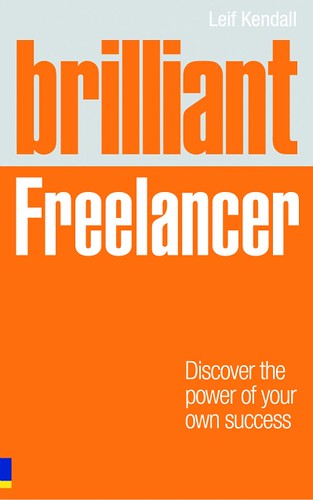
If you’re thinking about going freelance, or if you’ve been freelancing for a while but want some new ideas or advice, then check out the newly expanded Go Freelance guide.

It’s free – you just have to subscribe to Freelance Advisor.

Go Freelance contains everything I’ve learnt in my time as a freelancer. If you know a freelancer, please share it with them and if you like it, let us know!

14 questions copywriters must ask their clients

Election Interrogation

Being a freelance copywriter isn’t just about writing. Words are the tool that copywriters use to achieve results, but every smart copywriter understands that their real function is to quickly and accurately deliver a business proposition.

Before you can write about a business, you have to get the business. You have to understand what a business does and what’s important to their customers. You have to get down to the details, and prepare to write on behalf of a business.

Here are 14 key questions that copywriters should ask their clients, in order to get the information required to write great copy:

  • Why do your customers choose you?
  • What aspects of your business are you most proud of?
  • Why did you start this business?
  • What questions do new customers frequently ask?
  • What features do your customers look for in your products?
  • What benefits do your customers get from your products?
  • Who are your customers?
  • What are your customers primarily interested in?
  • Who are your competitors?
  • What is the typical process you go through with a customer?
  • Can I talk to your customers?
  • Can I have a tour of your factory or a chat with an operative? (to get a bird’s eye view of the business)
  • What tone is appropriate for your copy?
  • Why did you pick me? (this one is a useful insight into your own marketing)

    Now this seems obvious to me, but I’ve rescued a few clients from the clutches of copywriters who have asked no questions at all, and then produced irrelevant and totally inappropriate copy.

    So it’s important to ask questions, but also to ask insightful questions that provoke useful answers.

    Commit yourself: make changes and build momentum

    Motor Bikes Racing At Snetterton Scanned (16)

    I wrote a blog post recently for Freelance Advisor, which was all about motivation, and what I do when fear or inertia slows me down.

    One of things I wrote about was the tendency for momentum to build as soon as you take action, how the first push is the hardest, and how life takes over once you put your back into it. I was just browsing through one of my partner’s psychology books (Motivational Interviewing) when I found a quote that resonates with what I wrote:

    Until one is committed, there is hesitancy, the chance to draw back, always ineffectiveness, concerning all acts of initiative and creation. There is one elementary truth, the ignorance of which kills countless ideas and splendid plans: that the moment one commits oneself, then Providence moves too. All sorts of things occur to help one that would never otherwise have occurred. A whole stream events issues from the decision.

    - Johann Wolfgang von Goethe

    Fauxlancing – Regular Employment Meets Freelancing

    free
    So, I had this idea… I call it  fauxlancing

    What is fauxlancing?

    It’s a blend of two very different ways of working. It’s regular, full-time employment with a few freelance freedoms. It’s faux-freelancing.

    Why fauxlancing?

    Because regular employment has a problem: it sucks.

    The Multifarious, Pernicious and Persistent Problems with Regular Employment*

    Employees get a salary, a job description, a desk, a role, a place in the hierarchy, a routine, limitations, supervision, a patronising dullard to manage them, a thick blanket of bureaucracy and a few other dead weights to hang around their necks as they shuffle from cubicle to cubicle, desperately searching for something meaningful.

    The fact that regular employment is often so soul-destroying is not just a problem for employees; employers should dread the sight of dead-eyed worker droids because those are the people that will lazily, inefficiently and accidentally drain the life from their organisation.

    Fauxlancing is a word I made up to describe the practice of taking the good stuff from the freelance world and applying it to the world of regular employment.

    The Good Bits of Freelancing

    You might be wondering exactly I mean by the ‘good stuff from the freelance world’ that I just mentioned. Well, I often work with other freelancers, and the people I meet are generally confident, relaxed people who are in control of their own destiny. Freelancers take ownership of their working life. They grab their working life by the balls and get things done in the ways that make sense to them.

    Freelancers are relaxed in their work because they know what’s happening. Freelancers are better connected to their work because they don’t merely complete tasks; they pitch for work, liaise with clients, manage projects, raise invoices and deal with all the admin along the way.

    Because of this, freelancers can derive greater meaning from their work. They aren’t a hamster in a wheel, turning the gears of a giant thingamajig, dumb to managerial machinations, blind to the bigger picture.

    How the hell does someone become a fauxlancer?

    I don’t know. I haven’t really thought this through. If it’s your job to get the most out of permanent employees and you would like to chat about fauxlancing, give me a call.

    *Clearly, not all employers fit this description, and many employees have terrifically fulfilling jobs with employers who nurture them.

    Making the Most of Being Freelance

    I’m a big fan of freelancing. Being your own boss offers a billion wonderful benefits, which I won’t go into here. But it’s too easy to get wrapped up in the daily blend of work, projects and tasks, without really appreciating the freedoms that freelancing provides.

    I’ve decided to work harder at working enjoyably. Enjoying work is the best way to make it sustainable and as stressless as possible. Step 1 in my crusade to lap up the freelance lifestyle is:

    Lunch by the beach

    Working at The Werks means I’m only a ten minute bike ride away from the beach:

    Sea view

    And that bike ride isn’t particularly arduous… the entire world tilts slightly downward and my bike literally rolls me through the sweeping grandeur of Palmeira Square:

    Palmeira Square, Hove 2

    Why am I sharing this with you? Because I think it’s important for our sanity and internal health to enjoy life. Whether or not you’re freelance or live by the sea, you can probably create spaces in your days that give you a chance to look around and take in the view.

    A former colleague had a good approach to beautifying his life: he would always drive to work along the coast road. His colleagues headed inland, where the traffic was less dense. But not him. He tolerated the traffic and just allowed more time for his journey. Less time in bed, but an infinitely richer experience on his drive to work.

    A Guide to Starting Freelancing

    I’m really pleased to announce that a guide I produced for Freelance Advisor, Go Freelance: The Complete Guide to Starting Freelancing has been published on the Freelance Advisor website.

    I often get emails from people who are interested in becoming copywriters, and considering taking the freelance route. While I always respond to these enquiries, I rarely have time to offer as much advice as I would like. Freelancing has many aspects – it’s just like running a small business – and I never have enough time to carefully and thoroughly explain the things I have learnt about freelancing.

    Now I can point any curious persons in the direction of Freelance Advisor, and this guide.

    Go Freelance tackles many issues affecting freelancers:

    • Marketing
    • Clients
    • Book-keeping
    • Company structure
    • VAT

    And much more. It’s intended as a resource for people who are considering going freelance. But if you’ve already gone freelance, or been doing it for years, you might still find it useful.

    All feedback is very useful and greatly appreciated. Let us know what you think of this guide as your feedback will help shape future editions and other guides on different subjects. And please share it with anyone who might find it helpful.

    Useful lessons for freelancers – #10: Try everything

    This entry is part 5 of 5 in the series Useful Tips for Freelancers

    Try everything. You can’t predict where you will find work, or where work will find you. Explore your business world.

    Try a little of everything and see what works. Fortune favours the brave.

    Useful lessons for freelancers – #9: Volunteer Your Services

    This entry is part 12 of 5 in the series Useful Tips for Freelancers

    Volunteer your services. Better to be working for nothing than working at nothing. Most charities would love to hear from you. Help people. Make a difference. Do something wonderful.

    And you don’t have to volunteer for charities – many small businesses struggle to exist. Help a friend or a friend’s friend to succeed in their new venture. Each bit of experience you collect has massive potential benefits:

    • CV enhancement
    • New contacts
    • Karma credits
    • Testimonials

    So I recommend that you embrace any opportunity to get involved. Of course, be careful not to get a reputation as the person who does things for free.

    Useful lessons for freelancers – #8: Market yourself

    This entry is part 8 of 5 in the series Useful Tips for Freelancers

    Without regular, persistent, thoughtful marketing, most freelancers would not last long out of regular employment.

    So don’t forget to market yourself. You are a brand, a business and a person. All three are marketable. Some people shy away from marketing, perhaps because it sounds too American and corporate, but to me ‘marketing’ just means telling people that you exist. If you’re offering a good, professional service there’s no reason why you shouldn’t let people know.

    Useful lessons for freelancers – #6: It’s a fight

    This thought is probably more useful to people considering a freelance career, rather than those who’ve already taken the plunge:

    Freelancing is not an easy option. Freelancers are constantly finding jobs, losing jobs, finding jobs, losing jobs… Freelancing means fluctuating fortunes, financial roller-coaster rides, and a constant fight for success.

    And I love all that – but it’s definitely not easy.