The art of modern writing: are you stuck in the past?

old-letteropt

Out with the old

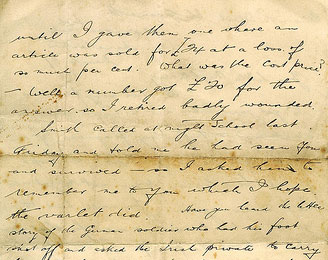
Most people were taught that serious writing demands formality and the use of certain stock phrases. Such as:

  • I write with reference to…
  • Please find enclosed…
  • I hereby have the pleasure of…
  • It is with great regret that…

In with the new

Luckily, the world has moved on, away from this kind of formality. These days we can write as we speak. This relaxed freedom can be hard to adjust to. But keep trying.

Contractions in action

At school I was taught to write do not instead of don’t. For some reason, it was thought that contractions were acceptable in speech but not in writing. Thankfully, this has changed. People now accept that it’s weird to speak one language and write another. Most people use contractions in speech, so feel free to use them in business. You have my permission.

Repetition

Another rule we were taught at school was to avoid repeating words. But, sometimes it’s useful to repeat words, such as when that word is the subject you’re writing about. Your writing will become strained if you struggle to use a different word for the same thing every time you mention it. So feel free to repeat words, particularly if doing so aids understanding.

(Picture courtesy of Laineys Repertoire)

Honest corporate communications – why it’s worth being direct…

Irrelevant SignI recently finished reading John Simmons‘ book We, Me, Them & It – How to Write Powerfully for Business, and was delighted to read this:

“Instead of saying ‘We’re committed to quality’, say ‘We check everything’. It just means a little bit more.”

Now what Simmons is espousing is honesty and directness. This kind of frank language is often frowned upon in business. Corporations think they must retain a lofty image. But who wants to do business with a distant, faceless corporation? People do business with people, so I think it makes much more sense to appeal to people with language that actually says something.

These days more and more businesses are realising the value of being human, and their copy and communications reflect this. As more people realise how refreshing it is to be addressed as a human, by a human, the more businesses will drop their formal, stuffy attitude.

But going back to the quote from John Simmons’ book- the interesting thing is that thousands of corporations say dull things like, “we’re committed to quality”, and thousands of people hear these messages and they roll over them, like another forgettable wave lapping the same tired coast. Such statements are forgettable because they’re meaningless. What does “committed to quality” mean? Committed to quality – in what way? How do you demonstrate that?

But “we check everything” tells how they’re committed to quality. It tells you: we care about what we do. We care enough to check.

(Picture courtesy of Tim Parkinson – [please note the picture hasn't got much to do with this post])

A new kind of news website…

Have you got a story to tell?All the news that fits

UPDATE 15/12/09: Nyouse is all over. It was a nice idea, but rather too ambitious for a busy copywriter and a young father who has approximately 0 hours to spend on something like Nyouse.

I’m helping to create a new kind of news website. It’s called Nyouse.com and it aims to put you back in the centre of the news. There won’t be journalists or editors. There’s just you and me and everyone else. We are the people and we are the news.

If you’ve got something you’d like to share with the world, tell us, and together we’ll tell everyone.

From the massive to the minute

Your story could be a local issue, or your opinions on a global issue. It could be a sports report, a theatre review or an expose of an outrageous scandal. It could be business, technology or science news. It could be a discussion of our recent past, or an eye-witness account of something happening now. Anything that’s of interest to someone else is newsworthy.

Kudos and publicity

Nyouse.com is a free website that wants to help people share their news. Nyouse.com will not pay for any articles. All content remains the property of the author. All authors will be clearly credited for their work.

Making the news

You can get involved in a number of ways. You can submit an article, or help edit others’ articles, or help spread the news about Nyouse. Please contact us to find out more.

(Picture courtesy of Jurek Durczak)

Write More – Writing Tip #1

Just write.

Write emails, blog posts, articles or letters. Everything you write makes you better at writing.

This isn’t Earth-shattering advice, but it’s important enough that I made it my #1 writing tip.

Show me a bad writer and I’ll show you someone who doesn’t write much. It’s as simple as that.

Copywriters are lucky in that they get plenty of practice to hone their writing skills. If you’re not so lucky, make the most of writing opportunities in your daily life to write, and take care in your writing.

Read More – Writing Tip #2

Writers don’t have to read every classic. You can read anything, but you must read something.

If you don’t read you will never understand how writing works, or how it can fail.

Be adventurous with your reading. Avoid re-reading the same few books.

Reading a variety of styles and sources will strengthen your writing, improve your vocabulary and fill you with ideas.

Ask for Feedback – Writing Tip #3

It can be hard to hand over your writing to someone. New writers often get very shy about their work, and nervous of what people will think.

But it’s important to get started with the process of finding readers.

Your first readers may be family, then friends, or anyone who will take the time. But whoever these readers are, they will provide an invaluable service.

Any advice, whether from a professional writer or an occasional reader, is useful. It will also get you used to the apprehension of waiting to hear what people think of your writing.

Criticism is hard to take, but it gets easier. Especially when it’s intelligent, constructive criticism that helps you progress.

Understand Grammar – Writing Tip #4

Grammar Crisis in Sainsbury’s

Grammar and spelling are a writer’s tools. Just as a plumber must understand and own a set of tools, writers must have a good grasp of grammar.

If grammar troubles you, I recommend reading Strunk and White’s Elements of Style. It’s a classic (and very short) book on using English well.

Once you get writing, ask another writer to read your work. Ask for feedback on your style as well as your content.

Practice writing and your grammar will soon improve.

(Picture courtesy of Richard Leeming)

Even the boss can blog (with a little help)

Blogging has revolutionised the way organisations communicate with their clients and peers.

CEOs are blogging about their work. Organisations are opening up, creating greater transparency in their dealings with customers.

Anyone in business that wants to blog must understand that the key to a blog’s appeal is honesty.

Readers accept that the CEO may need an editor, but they won’t accept ghost-written posts from an office junior. Blog content must always be high-quality, pertinent material, direct from the boss.

Copywriters make perfect editors – leaving your voice and your message intact while weeding out errors and improving readability.

Feed Your Imagination – Writing Tip #5

Gluttony

Your imagination will not feed itself.

If you want to write, you’ll need ideas to fuel your writing.

If you fill your brain with lots of interesting stuff, interesting stuff will come spilling out.

Consider your inputs as imagination fuel. What kind of things are you exposed to? Do you have a life filled with routine? If you’ve had the same job for a long time, take the same route to work, have the same old friends, re-read favourite books, only read a static selection of magazines and only ever watch the same shows on TV, you’re not giving yourself much chance of having a great idea.

Expand your circle of influences. Change things in your life. Do something you don’t normally do. Accept an invitation that you wouldn’t normally. Be adventurous. Watch a film that doesn’t naturally appeal to you.

New experiences, outside of your usual range, can trigger new thoughts.

The more you put into your brain, the more you can expect to get out.

(Picture courtesy of Sekator)

Are Copywriters Partly to Blame for Shrinking Vocabulary?

“Instead of stretching minds, worlds – including the world of words – are being shrunk to fit them.”

So writes Lynsey Hanley in the Guardian.

Lynsey’s article discusses society’s growing inarticulacy, and the way in which our education system is designed to suit capabilities rather than challenge them.

This got me thinking because copywriters are taught to use simple, plain English, to avoid baffling an audience they want to persuade. While this is clearly a sensible approach for business communications, copywriters should be wary of over-simplifying their writing.

We may eventually be left with too few words to adequately express ourselves.