The Cost of Copy Compared to the Cost of a Website

A couple of questions that I can’t answer:

How much does the average company spend on the copy for their website?

How does the cost of copy compare to the cost of design and development?

The web business is peculiar. Websites exist to present information, but it seems that in many cases the carrier (the website) is treated as the important thing, not the information.

To what extent is copy important?

Do the majority of web designers and web developers have their priorities all wrong? Should we flip the web development process around and focus more attention on the content?

Should more money be spent on great content, perhaps at the expense of design or features?

Hype vs Passion: Perfectly Judged Web Copy

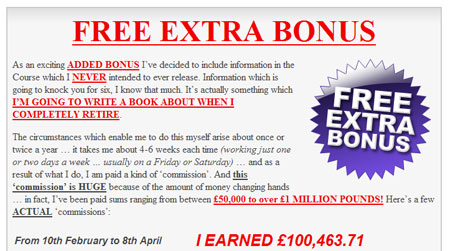
Hype-filled website copy

Copywriters face a common conundrum: how do you inject copy with energy and excitement without it reading like a horrible heap of hype?

I’ve been reading around, trying to work out exactly what makes powerful copy that excites people but doesn’t turn them off with the ripe stench of fraud.

Copy that’s redolent of hype makes readers lose trust – and when trust is lost, so too are sales.

It seems that the factors that influence whether copy reads like hype or not can be easily categorised:

The Good Stuff

You can grab attention and get people thinking about your products by telling them captivating stories, or by painting a picture with words.

Powerful words also help your messages to leap from the page and smack your reader in the face. (Powerful words are difficult to quantify, because it depends very much on their context. And many ‘powerful’ words are overused – which dilutes their power. But any word that carries energy or powerful connotations in the context that you’re using them in can be considered powerful.)

Clichés will never be powerful – so avoid them.

The Bad Stuff

Energy becomes hype when you use exclamation marks too much!!! See?

Copy that has loads of energy but no evidence to reinforce claims made is prime hype material. If you want to shout about something that’s amazing, make sure you back up those claims with evidence (authentic testimonials, client names etc).

Unrealistic claims. Don’t exaggerate. If a product could theoretically make a person a million dollars in a minute, but real people had only managed to earn a hundred dollars in a week, don’t be tempted to trade on the potential power of the product. Keep it real!

How to Do More on the Web – Part 2

This entry is part 2 of 2 in the series How to Do More on the Web

(Part 1: How to Do More on the Web: A Few Ideas)

Part 2: Thinking about Your Products and Services (Your Offering)

Okay, so you know what you’re selling, but do you know what people are buying?

If you’re selling books, your customers are buying information, knowledge and entertainment. If you’re selling cars, your customers are buying freedom, independence and a romantic idea. If you’re selling beds, your customers are buying a good night’s sleep, relaxation and comfort.

Whatever it is that you’re selling, think about what your customers are thinking about when they’re buying.

Make the Most of Your Features and Benefits

Another way of thinking about the difference between the thinking of the buyer and seller is to think about features and benefits.

The features of a product are things like:

•    Stainless steel construction
•    Dual-core processor
•    Available in 200 colours

These features mean something else to your customers. To a buyer, features translate into benefits.  Benefits like:

•    Won’t rust
•    Handles multiple applications without crashing
•    You can find one that suits you

Whenever you present a product or service on the web, mention the benefits as well as the features. It may sound like rudimentary advice, but it’s an essential part of any website. Many organisations fail to clearly present the basis of their offer. What seems obvious to you, from within your organisation, is potentially alien to your visitors.

See also:

Do People Understand?

How to Do More on the Web – A Few Ideas

This entry is part 1 of 2 in the series How to Do More on the Web

How to Sell More on the Web:

A Thoughtful Approach to Crafting Success

This guide isn’t just about selling more on the web: it’s about achieving your goals, whatever they are.

That might mean selling tickets to your gigs, or getting donations for your charity, or building support for your big idea. Whatever you’re trying to do, the principles and ideas covered will apply to you. Just bend the suggestions until they make sense for you.

Good websites are full of people’s ideas. Anything worthwhile needs a bit of brain-space. As soon as you start thinking about your website your chances of success increase dramatically. Most websites suck and fail because they are designed and built in haste and then left to gather dust. Always view your website as an evolving work in progress.

If you get stuck, and can’t find a way to progress, email leif@kendallcopywriting.co.uk – if I can spare a few minutes I’ll think about your conundrum.

This guide should answer questions like:

  • Why doesn’t anyone visit my website?
  • Why do people come to my website, but never buy anything?
  • What can I do to create interest around my website?

Who is this for?

This guide is designed to help anyone with a website. If you’re a very experienced website creator/owner/manager then this guide might not offer anything new. But if your website doesn’t do a lot, then you might find a few useful ideas.

Success Doesn’t Have to Lead You to Evil

Selling more things, or recruiting more donors, or persuading people that your scheme is brilliant does not need to involve under-hand tactics. Success does not require evil.

If you’re offering something useful then you should let people know. This guide is all about how you can let people know.

Part 1: Thinking about Your Customers

Before you think about your website, you need to think about the people that you created it for: your customers.

  • Who are they?
  • What do they want?
  • Why do they want your products?
  • What can you offer them?
  • Where are they?
  • How can you get in front of them?

Who Are Your Customers?

If you’re going to sell anything to anybody, you’ll need to establish who wants what you’ve got. Are they:

  • Young, old, or in-between
  • Male or female
  • Organised around a niche
  • Highly web-literate or borderline Luddites
  • Pinko liberals or conservatives?

Identify your target audience. Think about who they are. Imagine you are them. Step into their shoes and consider their motivations. Ask yourself:

  • What do I want?
  • What am I trying to achieve?
  • What are my concerns?
  • What would make me happy?

Why Do Your Customers Want Your Products?

Okay, so you know what you’re offering, what it does and why people use it… or do you? Do you really know why people use your things, or engage your services?

You might think you know exactly what people are doing with your stuff, but you might be surprised to learn that people are misusing your products – or that they really just want your services for a reason other than the ones you intended.

Luckily, it’s easy enough to find out what your customers are up to. Just ask them. And you don’t need to set up a survey and harvest reams of data. Just call a few people and have a chat.

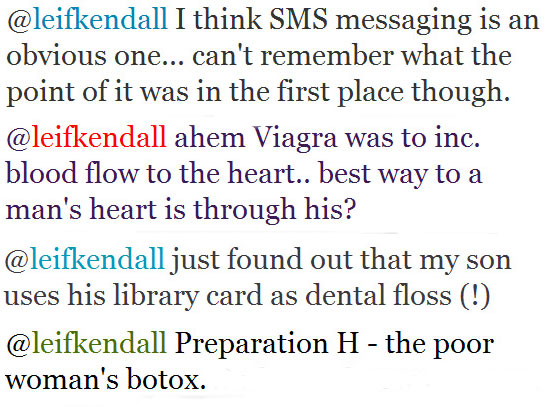
A few examples of products that have found unintended uses:

misprod

Thanks to the following for their suggestions:

http://twitter.com/mikebrondbjerg

http://twitter.com/SpaSpy

http://twitter.com/kathburke

http://twitter.com/Angpang

Meeting Your Clients in the Middle

Your products and services might be valued for reasons other than the ones you know about. If people think about your work in different ways to you, address this in your website’s copy.

Related blog post:

Apple’s Honesty Policy

What Can You Offer Your Customers?

Are there other ways you could help your customers? Are there additional products or services that fit with your existing range? What would people like from you? How can you make people’s lives better, easier or more fulfilling?

Don’t just assume that your products and services have to stop where they are now. If there’s something more you can offer – something real, something useful and desirable – then start offering it.

Crafting Your Offer to Match Your Customers

Many businesses decide what they do, then create products and services that they think are required, then offer them for sale. Rarely do businesses ask what is required – what is wanted – and then offer it.

It’s easier to sell the thing that people want, than it is to sell the thing that you need to sell. So if you’re struggling to sell something, consider changing it until it meets people’s needs.

Again, it’s a good idea to spend time talking to your clients. And don’t make it complicated. Just pick up the phone, dial a number, say hi, ask some questions.

Related blog post:

Don’t Treat Your Website Like a Commodity

End of Part 1

That’s it for Part 1. Part 2 will look at your products and services (although really we’ve already thought about this, but in relation to how your customers think about your products and services.) Part 2 is the shortest section.

In Part 3, we’ll explore the aspects of your website that might be failing. This will cover SEO, social media and other wonderful things.

The Absence of Marketing

Oh, and did you notice that I haven’t mentioned marketing ? There’s a good reason for that. Many people in marketing are disreputable,  unlovable rogues who smarm their way through life with slick grins and thin lies. ‘Marketing’ is a word so loaded with negative connotations that I prefer to discuss ‘marketing’ without using the word.


Invisible Copy – Why Your Copy Should Have a Small Ego

Short version

Good copy doesn’t attract attention to itself – it attracts attention to your products and services.

Long version

Occasionally clients expect copy to have some ‘wow’ factor. Perhaps they were expecting poetic, glorious prose. Or perhaps they were expecting copy that their clients would remark upon. Or perhaps they just expected something more sensational.

In most cases, for most organisations, copy should not draw attention to itself. Good copy does not stand out. It draws attention to your organisation, your products and your services. The best copy is like a ninja – it moves silently and people read it without even realising that they’re reading something.

So when you employ a copywriter, or write copy yourself, don’t aim for copy that is loud or spectacular. Aim for copy that communicates clear messages, sinking into the background and focussing attention on you and your offer.

10 useful lessons for freelancers…

Gosh, well… what a year! If you don’t know me, then you won’t know that this year I turned 30, quit my day job and had a baby. It’s been an amazing, exciting year (and it’s not even finished yet!).

And here I’d like to review the freelance copywriting aspect of that. Partly to share some ideas with you, and partly to record my own thoughts.

So starting on Monday I’m going to be posting a series of ten lessons that I’ve learnt during my time freelancing. These will be super-short micro-posts.

Feel free to share your comments from Monday!

New content for copywriters: articles, advice, tips

After Shaun Morrison (a freelance web designer) helped to make my site look nice, I’ve been busy adding useful information for copywriters and people looking to hire copywriters.

So if you have questions about what copywriters do and how they work, check out my new pages. If you still have any questions, please let me know and I’ll update my pages.

The evils of marketing-led enterprise…

In a follow-up to yesterday’s post about getting a marketing mind involved in business decisions, I’d like to

Maverick

expand on the views I expressed.

How marketing could make you bland

If every business only made products that were easy to sell, we wouldn’t have Stinking Bishop cheese, or Robin Reliants, or Michael Buble. The influence of marketing also has a terrible effect on Hollywood – stripping the art out of film and replacing it with dull, beige blockbusters in which everyone survives.

If my previous employer had allowed the sales team to dominate product development, every product would have been shamelessly populist, hell bent on crowd-pleasing, never daring to step in new directions.

Be a maverick, and to hell with marketing

Don’t run your business via the marketing department. What the hell do they know, anyway? Let ideas run sideways through the corporate field. Innovate like crazy. Business is about more than money.

Mixed messages

If you’re starting to feel confused, let me clarify: it’s a great idea to ask someone of a marketing bent to review your plans. It’s a terrible idea to let said marketing person run the show. Having a say is one thing, taking control is something else.

(Picture courtesy of Alaskan Dude)

Why you should involve marketing in all your business decisions

I often get drafted in to write copy for projects that are nearing completion. Copy (supposedly) is the icing on many a corporate cake. I waltz in with a pen, release my prodigious vocabulary, then naff off. And often, that approach is just fine. But, to paraphrase NatWest adverts, there is a better way…

Everything in business should be run past a copywriter

I once worked for a company that designed and produced a large number of original products. The product development team was highly creative and highly effective, but on occasions the sales team would despair because unsellable products were produced.

The sales team knew, from their close relationships to their buyers, what would sell and what would not.

Eventually, the sales team were brought in to development meetings. From then on, product development was focused on products that would have a future.

It’s always a good idea to think about the details of selling a product before you make it. If a copywriter can write about your product, it has a better chance of success. Planning the marketing of a product or service will often suggest variations or alternatives to the original product.

SEO and product development

Search Engine Optimisation (SEO) also plays an interesting role in modern product development. Performing a thorough keyword analysis often suggests under-exploited niches, which in turn may affect the products and services a company offers.

So if you know a friendly copywriter, give them a call now. (My number is 07790 748 243.) A copywriter or marketing professional may provide insights that open up profitable new markets.

Shame about the name

Product naming is another area that copywriters can help with. Copywriters will be thinking about products on shelves, words on websites, and what those things will mean to the public. Don’t name a product without carefully considering the details of selling it. Even better, ask someone from outside your company for a second opinion.

Why you should let your copywriter be a tad adventurous…

adventurous-catopt

More wisdom on corporate communication from John Simmons’ We, Me, Them & It – How To Write Powerfully for Business

On the subject of ‘fanciful’, ‘playful’, ‘imaginative’, ‘passionate’ or ‘intellectual’ language and its use in business, John suggests that we should take a few risks. Loosen up, and say what you feel. John writes:

“More and more, as I work with companies, they are yearning to be more than just an organisation focused on delivering numbers. They want to be seen as risk-taking, creative, entrepreneurial – otherwise they are too grounded in the reality of simply earning a living.”

So perhaps you should let your copywriter express your business in fresh, honest and direct language. Take a few risks, open yourselves up and let your customers know that you’re human.

Then John offers a lovely quote from John Scully of Apple:

“The new corporate contract is that we’ll offer you an opportunity to express yourself and grow, if you promise to leash yourself to our dream, at least for a while.”

Why can’t I have that written into my employment contracts?

(Picture courtesy of Broterham)