Brighton’s Best Business Cards?

I’ve always felt that business cards are important, but it can be tricky to design something that’s as useful as it is memorable.

Jack Hooker, a local graphic designer, recently put Moo.com to good use and designed some rather lovely business cards:

jackhookercards

Are these Brighton’s best business cards?

Can Jack ever compete with this man?
(For)getting a Return on Your Social Media Marketing

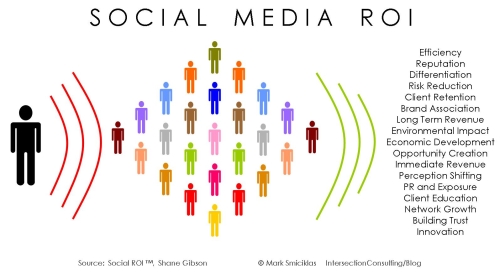
Social Media ROI

Do you ever wonder if the time you invest in Twitter, Flickr, Facebook and your blog is worth the effort? It’s a reasonable thing to wonder, but I suspect that for most small businesses it’s better to just relax, enjoy it, and see what emerges.

Everything in life can be monitored, tracked, charted, monetized and commoditized. But that doesn’t mean you should.

If you are asking “is all the time I spend on Twitter really worth it?” – it’s probably not. If you enjoy socialising with your friends and contacts, then continue. If it feels like work and it just soaks up your time without giving anything back, spend less time on it.

Of course, for mega-corporations with marketing departments, there will always be a need to quantify the effectiveness of something like social media. And that’s fine.

What do you think? Is social media a waste of time? Or a useful way to connect with the people around you?

You Can’t Please Everyone: Business Advice from Haruki Murakami

Wind-Up Bird
I ‘ve been a fan of Haruki Murakami, ever since @megnog bought me The Wind Up Bird Chronicle. I’m now reading What I Talk About When I Talk About Running, Murakami’s running memoir.

Anyway, I just wanted to share this with you:

“…you can’t please everybody. Even when I ran my bar I followed the same policy. A lot of customers came to the bar. If one out of ten enjoyed the place and said he’d come again, that was enough. If one out of ten was a repeat customer, then the business would survive.

“To put it the other way, it didn’t matter if nine out of ten didn’t like my bar. This realization lifted a weight off my shoulders. Still, I had to make sure that the one person who did like the place really liked it. In order to make sure he did, I had to make my philosophy and stance clear-cut, and patiently maintain that stance no matter what.”

What a peculiar idea! Murakami’s suggestion – that sometimes it’s better to pursue the business that makes sense to you, rather than desperately trying to please every customer – is vastly contrary to the modern preoccupation with pleasing everyone and countering every criticism.

How to Do More on the Web – Part 3

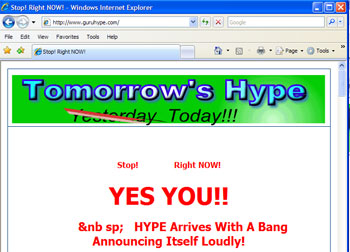
hypesite

Part 3: Thinking About Your Website

Websites are versatile, powerful extensions of an organisation. Your website can do many things, but not without your help. You may have expected your website to take care of itself, to run quietly in the background, pulling in customers and generating new business.

You might not have a Website Manager, or Webmaster, or Weblord, or someone steering your website through the crowded digital seas. But to find success on the web, somebody (probably you) will need to start thinking about your website. And that somebody will need to add and remove content, make changes, update information, spread the news and find an audience.

Left to their own devices, websites do absolutely nothing. Without human involvement, websites are lazy, good-for-nothing cash-sponges.

Working Out Where You’re At

Before you think too much about where you’re going wrong, or what you should change, look at your website’s traffic statistics. You should be able to see things like:

* Daily visitor numbers
* Popular content (what people are looking at)
* Traffic sources (where people came from)
* Length of stay
* Bounce rate (percentage of people who leave your site immediately after arriving, without viewing a second page)

If you don’t have access to this information, ask your web developer to provide it.

If you have this information, spend some time looking at it. Analytics data can highlight many things. Such as:

Misleading inbound links

If your website appears highly in searches for cheese pizzas, but you only sell cheese cloth, then people may come to your site looking for something you don’t offer. As soon as they realise their mistake they will leave. If lots of people do this, your bounce rate will be high.

A high bounce rate could also indicate that nobody likes your website. Is it ugly? Offensive? Poorly constructed? Horribly written? A hideous website could be turning customers away. Ask a few trusted friends and colleagues for a brutally-honest critique of your website.

Dead-ends

Look at the most popular exit page. This is the page that your visitors look at before leaving your site. If the most popular exit page is a contact form, or the sales/enquiry page of your site, then people are doing what you want.

If you find that an unusual page is popping up as a frequent exit route, check the page for any suspicious activity. Is there something wrong with the page? Does the navigation work, and are visitors offered a next step on their journey?

Unusual Traffic Sources

The list of traffic sources can be revealing. Sometimes visitors come from unexpected places. And sometimes this can show a new way of finding people.

Unusual Keyword Choices

Scan the list of keywords that people have used to find your site. Any surprising choices? Keep your eyes peeled for anything that suggests people are searching for you with keywords that you hadn’t considered. It may be worth integrating these keywords into your copy a little bit more.

The Complexities of Web Analytics

Web analytics is a large and complex field. Explore it as much as you feel is necessary. For many small organisations with a website to keep alive, a weekly perusal of the statistics will suffice.

Of course, don’t just gormlessly look at a few numbers: think about what they imply. Draw meaning from the numbers. Consider what those numbers say about the people who visit your site. When looking at website analytics, you’re looking for insight into the minds and behaviours of your potential customers.

Gathering Web Analytics – Use Google

Google Analytics is a free program that provides fantastic traffic stats. If you don’t have it, or something similar, ask a friendly web developer to install it for you. If you don’t know a friendly web developer, ask me – I know several very charming geeks.

Getting People to Come to You

The biggest problem that any website faces is invisibility. The web is stuffed with great websites, and if you want any chance of being seen, you’ll have to fight for people’s attention.

Websites do not automatically generate traffic. Without a good reason to visit your site, nobody will visit your site.

If you want a healthy flow of human traffic to your website, you’ll need to purposefully cultivate that traffic.

In Part 4, we look at Search Engine Optimisation (SEO)

See also:

Part 1: A Thoughtful Approach to Crafting Web Success

Part 2: Thinking About Your Products and Services

A Very Bad Sign (Literally)

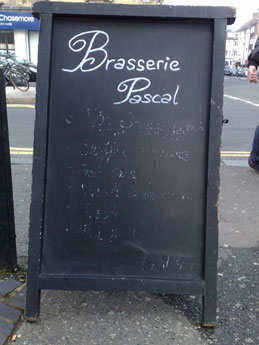
Pavement signs are fantastic – your business can leap beyond the boundary of your premises and stand in the path of potential customers. What a jolly good idea!

But, it does help if the sign contains some tempting invocation to pull people towards your enterprise. I recommend you strive for something marginally more persuasive than this:

A Bad Sign
A Bad Sign

Internet Marketing Gurus – What do they know?

Have you ever bought a product or service from an Internet Marketing Guru?

I’m trying to learn more about the curious world of the Internet Marketing Guru and would love to hear from anyone who has worked with people like:

  • Ewen Chia
  • Andrew Reynolds
  • David DeAngelo (Eben Pagan)

How to Do More on the Web – A Few Ideas

How to Sell More on the Web:

A Thoughtful Approach to Crafting Success

This guide isn’t just about selling more on the web: it’s about achieving your goals, whatever they are.

That might mean selling tickets to your gigs, or getting donations for your charity, or building support for your big idea. Whatever you’re trying to do, the principles and ideas covered will apply to you. Just bend the suggestions until they make sense for you.

Good websites are full of people’s ideas. Anything worthwhile needs a bit of brain-space. As soon as you start thinking about your website your chances of success increase dramatically. Most websites suck and fail because they are designed and built in haste and then left to gather dust. Always view your website as an evolving work in progress.

If you get stuck, and can’t find a way to progress, email leif@kendallcopywriting.co.uk – if I can spare a few minutes I’ll think about your conundrum.

This guide should answer questions like:

  • Why doesn’t anyone visit my website?
  • Why do people come to my website, but never buy anything?
  • What can I do to create interest around my website?

Who is this for?

This guide is designed to help anyone with a website. If you’re a very experienced website creator/owner/manager then this guide might not offer anything new. But if your website doesn’t do a lot, then you might find a few useful ideas.

Success Doesn’t Have to Lead You to Evil

Selling more things, or recruiting more donors, or persuading people that your scheme is brilliant does not need to involve under-hand tactics. Success does not require evil.

If you’re offering something useful then you should let people know. This guide is all about how you can let people know.

Part 1: Thinking about Your Customers

Before you think about your website, you need to think about the people that you created it for: your customers.

  • Who are they?
  • What do they want?
  • Why do they want your products?
  • What can you offer them?
  • Where are they?
  • How can you get in front of them?

Who Are Your Customers?

If you’re going to sell anything to anybody, you’ll need to establish who wants what you’ve got. Are they:

  • Young, old, or in-between
  • Male or female
  • Organised around a niche
  • Highly web-literate or borderline Luddites
  • Pinko liberals or conservatives?

Identify your target audience. Think about who they are. Imagine you are them. Step into their shoes and consider their motivations. Ask yourself:

  • What do I want?
  • What am I trying to achieve?
  • What are my concerns?
  • What would make me happy?

Why Do Your Customers Want Your Products?

Okay, so you know what you’re offering, what it does and why people use it… or do you? Do you really know why people use your things, or engage your services?

You might think you know exactly what people are doing with your stuff, but you might be surprised to learn that people are misusing your products – or that they really just want your services for a reason other than the ones you intended.

Luckily, it’s easy enough to find out what your customers are up to. Just ask them. And you don’t need to set up a survey and harvest reams of data. Just call a few people and have a chat.

A few examples of products that have found unintended uses:

misprod

Thanks to the following for their suggestions:

http://twitter.com/mikebrondbjerg

http://twitter.com/SpaSpy

http://twitter.com/kathburke

http://twitter.com/Angpang

Meeting Your Clients in the Middle

Your products and services might be valued for reasons other than the ones you know about. If people think about your work in different ways to you, address this in your website’s copy.

Related blog post:

Apple’s Honesty Policy

What Can You Offer Your Customers?

Are there other ways you could help your customers? Are there additional products or services that fit with your existing range? What would people like from you? How can you make people’s lives better, easier or more fulfilling?

Don’t just assume that your products and services have to stop where they are now. If there’s something more you can offer – something real, something useful and desirable – then start offering it.

Crafting Your Offer to Match Your Customers

Many businesses decide what they do, then create products and services that they think are required, then offer them for sale. Rarely do businesses ask what is required – what is wanted – and then offer it.

It’s easier to sell the thing that people want, than it is to sell the thing that you need to sell. So if you’re struggling to sell something, consider changing it until it meets people’s needs.

Again, it’s a good idea to spend time talking to your clients. And don’t make it complicated. Just pick up the phone, dial a number, say hi, ask some questions.

Related blog post:

Don’t Treat Your Website Like a Commodity

End of Part 1

That’s it for Part 1. Part 2 will look at your products and services (although really we’ve already thought about this, but in relation to how your customers think about your products and services.) Part 2 is the shortest section.

In Part 3, we’ll explore the aspects of your website that might be failing. This will cover SEO, social media and other wonderful things.

The Absence of Marketing

Oh, and did you notice that I haven’t mentioned marketing ? There’s a good reason for that. Many people in marketing are disreputable,  unlovable rogues who smarm their way through life with slick grins and thin lies. ‘Marketing’ is a word so loaded with negative connotations that I prefer to discuss ‘marketing’ without using the word.


Writing Things Down to Get Things Done

Obvious: If you write things down, they’re more likely to get done.

Less obvious: If you write down a commitment to do something, and give that written commitment to people you respect and admire, then you’re even more likely to keep your promises. This is because you will have engaged one of the principles of persuasion.

In Influence: The Psychology of Persuasion, Robert Cialdini shares his comprehensive research into the psychology behind persuasion. Cialdini was, by his own admission, a terrible sucker for salesmen’s tricks and he sought to understand how marketers manipulated him into decisions he didn’t want to make.

One of the six universal principles of persuasion is commitment and consistency. Basically, you and everyone around you strive to remain consistent. Socially and culturally, it’s important that we are viewed as people who stick to their word, who make consistent choices and who can be understood on the basis of past actions. Inconsistent people are difficult, flaky, unreliable and undesirable. Clearly, in any society, consistency is a valuable trait, and the need to appear consistent is paramount.

It is this human need to appear consistent that marketers abuse. I won’t go into the depths of Cialdini’s fascinating research here (I recommend you read the book) but I would like to share one story from Influence.

A woman had struggled for years to quit smoking. In spite of reading numerous studies linking smoking to cancer, she hadn’t been able to quit. Eventually, after reading about yet another study, she realised that her pride was troubled. It was embarrassing for her to be smoking when it was so clearly a bad choice. She decided to use her pride and her need to be seen as consistent to help her quit.

She bought blank business cards and wrote, “I promise you that I will never smoke another cigarette”. She gave the cards to family, friends and, after some hesitation, the man she adored. Now, the woman hesitated before giving the card to her lover because she couldn’t risk him thinking less of her. By sharing the commitment with him, she was binding herself to it.

And it worked. She never smoked again.

So if you’re struggling to get something done, try writing it down and giving your promise to the people that matter most. Make your promise to the people that you could never disappoint.

Sometimes we can use the principles of persuasion against ourselves, in order to achieve positive goals.

Networking not working? Why You Might be Getting it Wrong

Business meeting
I’m a big fan of networking events. I think it’s good practice for anyone in business to get out and be seen. Meet people, introduce yourself, explain what you do. It’s nice to meet the other people who are working around you. And it’s useful.

But networking isn’t always useful. Networking can become a circuit of the same dudes in shiny suits – everyone selling, nobody buying.

The key to good networking is to attend events that your customers go to. Meeting other people in business is nice, and it’s always useful to have a solid network of connections – but nice networks and connections won’t pay the bills. You need to meet potential clients, not a bunch of people who want to sell you something.

So, who are your customers, and where do they hang out?

(Picture courtesy of llawliet via Flickr)

A Guide to Starting Freelancing

I’m really pleased to announce that a guide I produced for Freelance Advisor, Go Freelance: The Complete Guide to Starting Freelancing has been published on the Freelance Advisor website.

I often get emails from people who are interested in becoming copywriters, and considering taking the freelance route. While I always respond to these enquiries, I rarely have time to offer as much advice as I would like. Freelancing has many aspects – it’s just like running a small business – and I never have enough time to carefully and thoroughly explain the things I have learnt about freelancing.

Now I can point any curious persons in the direction of Freelance Advisor, and this guide.

Go Freelance tackles many issues affecting freelancers:

  • Marketing
  • Clients
  • Book-keeping
  • Company structure
  • VAT

And much more. It’s intended as a resource for people who are considering going freelance. But if you’ve already gone freelance, or been doing it for years, you might still find it useful.

All feedback is very useful and greatly appreciated. Let us know what you think of this guide as your feedback will help shape future editions and other guides on different subjects. And please share it with anyone who might find it helpful.